EN


In a factory, monitors are used in many different places. Some are installed beside CNC machines, some are used on production lines, and others are placed in inspection areas. Different workstations have different needs, so choosing the right monitor mount is important.
There are many types of industrial monitor mounts on the market. Wall mounts, articulating arms, floor stands, and rail mounts are four common options. They all have their own uses. So, how do you choose the right one for your equipment?
Let's look at these four types and see where they can be used.
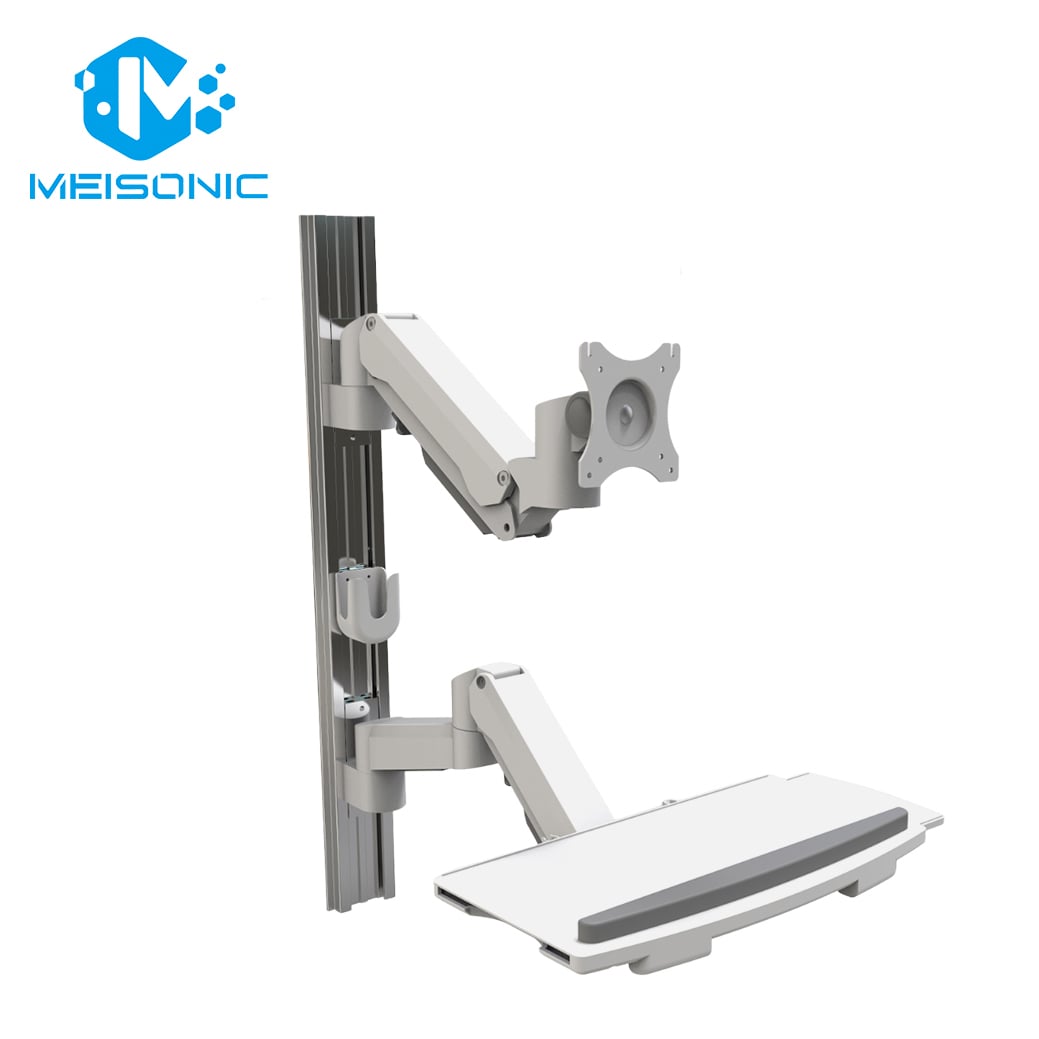
1. Wall Mount: Save More Space
A wall mount is a good choice when there is not much space on the workbench. It is installed on a wall or another suitable fixed surface, so the monitor does not need to take up space on the desk.
This type of Industrial monitor mount is often used in CNC rooms, factory workshops, and control areas. Workers can check machine information without putting the monitor on the workbench.
A wall mount can also help keep the working area clean. However, before installation, you need to check whether the wall or mounting surface is strong enough to support the monitor.
If your workstation has limited space and the monitor does not need to move very far, a wall mount may be a good choice.
2. Articulating Arm: More Flexible Adjustment
Sometimes, workers need to look at the monitor from different positions. A fixed mount may not be convenient in this situation.
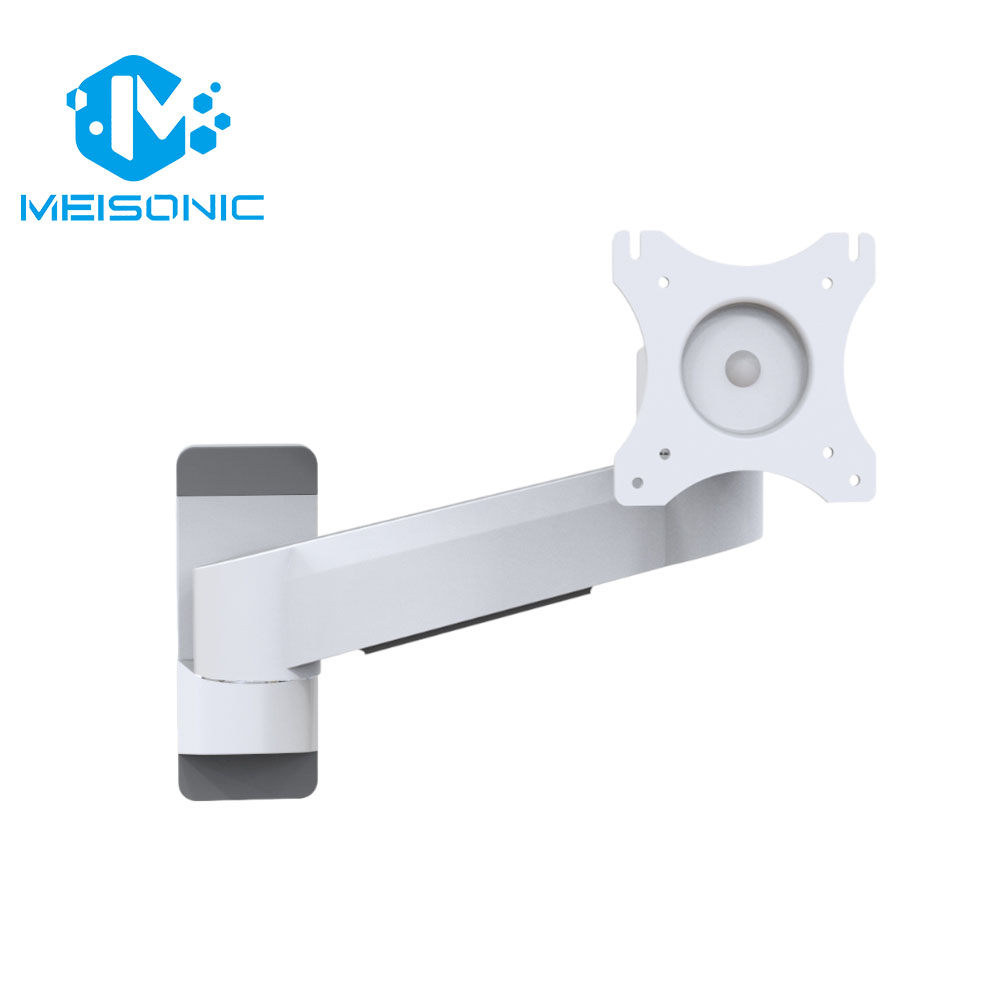
An articulating arm allows the monitor to move in different directions, depending on its design. The screen can be moved closer to the worker or turned to a better viewing angle.
This kind of Monitor mount is useful for CNC machines, inspection stations, and production lines. For example, a worker may need to check the monitor and operate a machine at the same time. With an adjustable arm, the screen can be moved to a suitable position when needed.
An articulating arm is a good choice when the monitor needs to be adjusted often. Before choosing one, make sure its load capacity and adjustment range match your monitor.

3. Floor Stand: Easy to Place in Different Areas
Not every workstation has a suitable wall or desk for installation. In this case, a floor stand may be a better option.
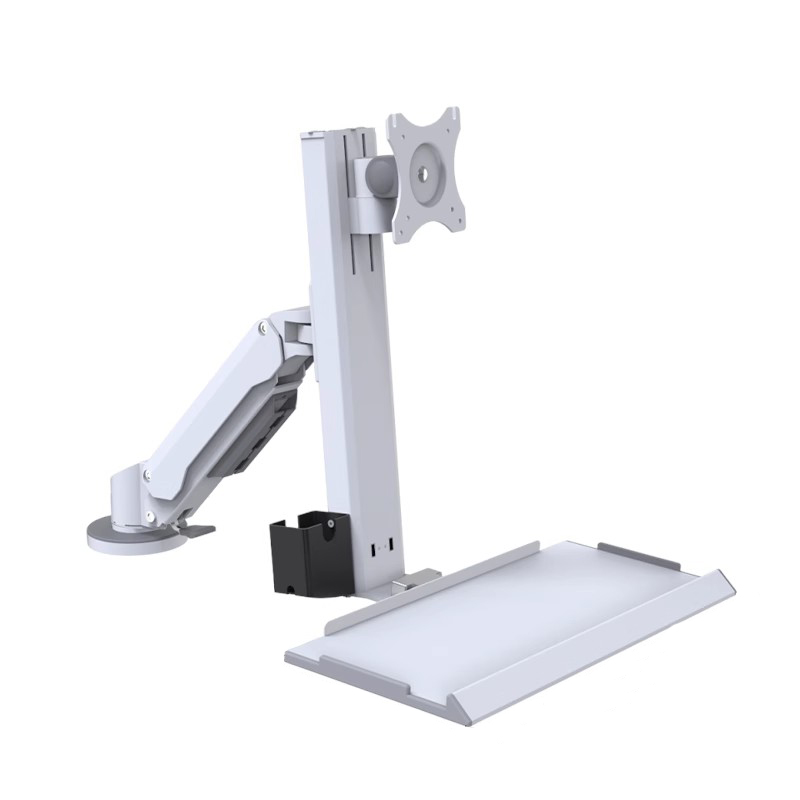
A floor stand supports the monitor from the ground. Depending on the design, it can be placed beside a machine, near a production line, or in an area where workers need to check information.
This type of mount can be useful in workshops where the equipment layout may change. It does not always need to be installed on a wall or workbench.
However, you should also consider the space around the stand. The base needs a suitable place, and the stand should not block the walking path or affect other work.
If you need to place a monitor in an open area without a suitable wall or desk, a floor stand is worth considering.
4. Rail Mount: Useful for Special Workstations
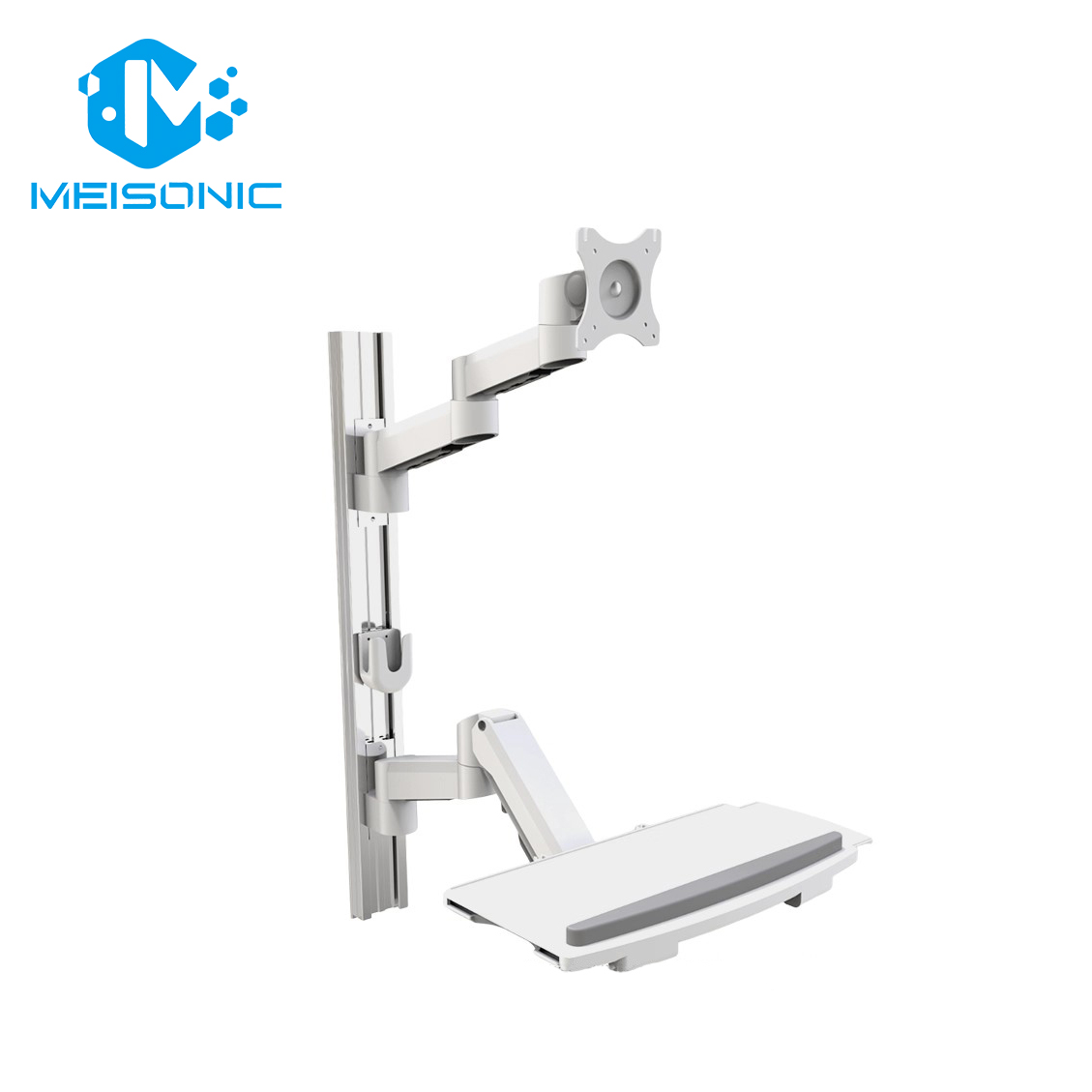
A rail mount is designed to be installed on a compatible rail system. It can be useful when the workstation already has rails or when several devices need to be arranged in a planned way.
In some industrial environments, equipment is installed in a limited space. A rail mounting system can help place the monitor in a suitable position without adding a separate desk or floor stand.
Rail mounts may be used in control areas, equipment workstations, and some production systems. But the rail type, mounting method, and load capacity need to be checked before buying.
Not every rail mount fits every rail system. So, it is important to confirm the installation details first.
How to Choose the Right One?
After learning about these four types, you may still wonder which one is best for your equipment. The answer depends on your working area and how you use the monitor.
If you want to save desk space, a wall mount may be suitable. If workers need to change the screen position often, an articulating arm may be a better choice. If there is no suitable wall or desk, consider a floor stand. If your equipment already uses a compatible rail system, a rail mount may be more practical.
You should also check the monitor size, weight, VESA mounting holes, and available installation space. These details can help you avoid choosing a mount that does not fit your equipment.
Conclusion
There is no single industrial monitor mount that works best for every workstation. Wall mounts, articulating arms, floor stands, and rail mounts all have their own advantages.
The best choice is the one that fits your equipment and daily work. Before making a decision, think about where the monitor will be installed, how often it needs to move, and how much space you have.
Meisonic offers monitor mounting solutions for different industrial applications. By choosing the right Industrial monitor mount, you can keep the screen in a suitable position and make better use of your working space.